Dysentery: Symptoms, Treatment and What to Do Without a Doctor
Dysentery is diarrhoea containing visible blood, usually caused by an intestinal infection. It may also bring stomach cramps, fever and mucus in the stool. Although some infections improve within days, blood in diarrhoea is a reason to get medical help promptly, not a symptom to ignore.
If you are caring for a sick child, travelling far from a clinic or dealing with an unreliable water supply, knowing the next safe step matters. This guide explains the causes, warning signs, treatment and prevention in simple language, including what to do while arranging medical care.
Important: This article provides general health education, not a diagnosis or an individual treatment plan. Seek urgent medical assessment for bloody diarrhoea. Get emergency help immediately if the person is confused, collapses, cannot drink or shows signs of severe dehydration.
Table of Contents
- What Is Dysentery?
- Causes and How It Spreads
- Symptoms and Warning Signs
- How It Affects the Body
- Diagnosis and Treatment
- What to Do When and Where There Is No Doctor
- Food and Recovery Tips
- How to Prevent Infection
- Expert Medical Advice
- Frequently Asked Questions
- Conclusion
- References
What Is Dysentery?
Dysentery describes an illness involving diarrhoea with blood. The infection inflames the intestine, which can cause bleeding and a frequent urge to pass stool. Some people pass only small amounts each time, even though they feel they urgently need the toilet.
Not every episode of diarrhoea is dysentery. Watery diarrhoea without visible blood is different, although it can also cause dangerous dehydration. Likewise, blood in the stool can have causes other than an infection. A healthcare professional should assess it rather than assuming the cause from appearance alone.
Causes and How It Spreads
Two well-known causes are bacteria and an intestinal parasite. The right treatment depends on which organism is responsible.
Bacterial dysentery
Shigella bacteria are an important cause. Other bacteria can also cause bloody diarrhoea, so a clinician may request a stool test instead of treating every case in the same way.
Amoebic dysentery
The parasite Entamoeba histolytica can infect the bowel and cause bloody diarrhoea. Its treatment differs from treatment for bacterial infections. In some cases, it can spread beyond the intestine, including to the liver.
Common routes of infection
Infections spread when tiny amounts of infected stool reach another person’s mouth. This can happen through:
- Drinking contaminated water or using it to prepare food.
- Eating food handled with unwashed hands.
- Touching contaminated toilet surfaces, then touching the mouth.
- Changing nappies or helping a sick person without washing hands afterward.
- Sexual contact involving exposure to stool.
Anyone can become infected. Unsafe water, inadequate sanitation and crowded living conditions make transmission easier, but outbreaks can also occur where clean water is normally available.
Symptoms and Warning Signs
The main symptom is diarrhoea with visible blood. Other symptoms may include:
- Mucus in the stool.
- Abdominal pain or cramps.
- Fever and a general feeling of illness.
- Frequent, urgent trips to the toilet.
- Painful straining or the feeling that the bowel has not emptied.
- Nausea, reduced appetite or vomiting.
Symptoms vary with the cause. Their severity alone cannot reliably tell you whether the infection is bacterial or amoebic.
When to seek urgent medical assessment
Arrange prompt assessment for any bloody diarrhoea, even if the person can still drink. Babies, young children, older adults, pregnant people and people with weakened immune systems need a particularly low threshold for help.
When it is an emergency
Go to the nearest emergency service or call the local emergency number if there is:
- Confusion, fainting, unusual difficulty waking or extreme weakness.
- Inability to drink, or repeated vomiting that prevents fluid intake.
- Very little or no urine, especially with worsening illness.
- Severe or worsening abdominal pain, or a swollen abdomen.
- Heavy bleeding or signs of collapse.
In children, watch for fewer wet nappies, dry mouth, sunken eyes, unusual irritability or marked sleepiness. Do not wait for every warning sign to appear.
How It Affects the Body
The main immediate concern is dehydration. Diarrhoea removes water and essential salts, also called electrolytes. Fever and vomiting can make these losses worse.
Dehydration can affect circulation and kidney function. Children can become dehydrated quickly, while older adults may not feel strongly thirsty despite losing fluid.
Illness also reduces appetite and can interfere with nutrition. Repeated episodes may contribute to poor growth in children. Less commonly, certain infections cause serious complications affecting other organs. These possibilities are reasons for timely assessment, not reasons to panic: many people recover well with appropriate care.
Diagnosis and Treatment
A clinician will ask about the symptoms, drinking and urination, recent travel, food and water exposure, medicines and other medical conditions. A stool sample can help identify the cause. Blood tests or other investigations may be needed if the person is seriously ill.
Replace fluids and salts
Oral rehydration solution, usually called ORS, replaces both water and salts lost through diarrhoea. Mix a commercial ORS sachet with exactly the amount of safe water printed on its packet. Different sachets may require different volumes.
Do not add extra sugar or salt, divide the powder by eye or mix it with milk, juice or fizzy drinks. Offer frequent small sips. If vomiting occurs, pause briefly, then try smaller amounts more slowly. Severe dehydration may require intravenous fluids in a healthcare facility.
Use infection-specific treatment when prescribed
Some bacterial infections need antibiotics, especially when illness is severe or the patient is vulnerable. However, not every case benefits from them. Resistance can also make a particular antibiotic ineffective.
Amoebic infection requires a different treatment plan, often including medicines that treat the infection and clear parasites remaining in the intestine. Do not assume that a single medicine or a leftover course will be sufficient.
Do not self-prescribe antibiotics or metronidazole. Certain causes of bloody diarrhoea need special caution with antibiotics. Follow the clinician’s chosen treatment and contact them if symptoms worsen or do not improve as expected.
Avoid medicines that slow the bowel
Do not take loperamide or similar bowel-slowing medicines for bloody diarrhoea. They can make some infections worse. Do not give a child an adult diarrhoea medicine.
For childhood diarrhoea, a clinician may also recommend zinc according to current local guidance. Ask about the appropriate dose rather than copying an old prescription or another child’s treatment.
What to Do When and Where There Is No Doctor
Home care is a bridge to medical help, not a replacement for assessing bloody diarrhoea. If the nearest doctor is far away, begin safe first aid while arranging transport or contacting an available health worker.
- Check for emergency signs. Confusion, collapse, inability to drink or severe dehydration means urgent transport. Do not force drinks into someone who is unconscious or cannot swallow safely.
- Start correctly mixed ORS if available. Use safe water and follow the packet exactly. Offer small, frequent sips while the person is awake and able to swallow.
- If ORS is unavailable, keep offering safe drinking water while obtaining it. Water is better than no fluid, but it does not replace all the salts lost. Continue breastfeeding. Do not improvise salt-and-sugar amounts without reliable instructions and accurate measurements.
- Make water safer. Where boiling is the practical option, bring water to a rolling boil for one minute, or three minutes above about 2,000 metres. Let it cool in a clean, covered container. Boiling does not remove chemical contamination.
- Keep a simple record. Note stool frequency, blood, vomiting, temperature if available, fluid intake and urination. Take this information to the health worker.
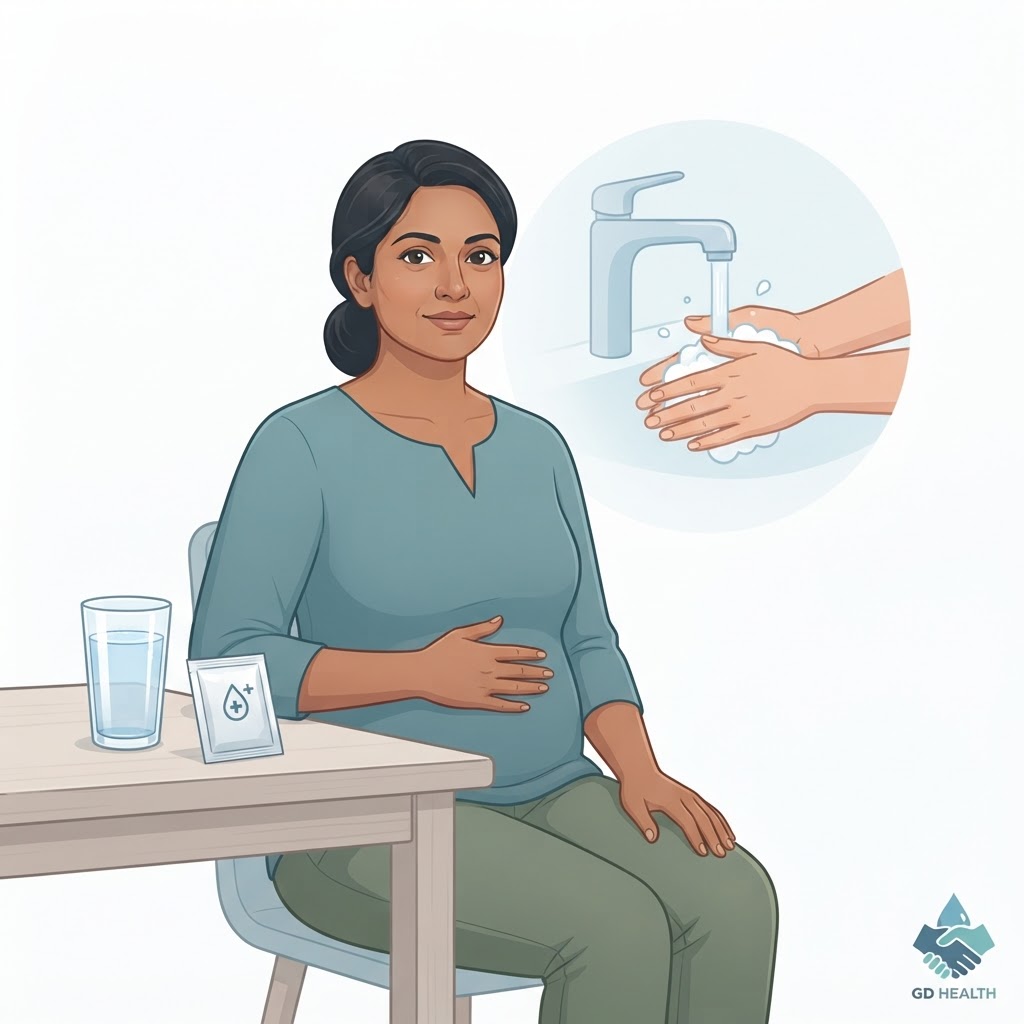
- Prevent spread. Wash hands with soap and water, clean shared toilet surfaces and avoid preparing food for others.
- Seek the nearest available qualified help. A clinic, nurse, trained community health worker or telephone health service may help arrange assessment. Do not wait several days to see whether the blood disappears.
Avoid alcohol, strong herbal mixtures and remedies that claim to flush out the infection. They do not replace ORS or an assessment and may cause harm or delay effective treatment.
Food and Recovery Tips
Eat when you feel able. There is usually no need to fast or restrict yourself to one particular food. Small meals may be easier to manage if appetite is poor.
- Try familiar foods such as rice, porridge, potatoes, soup or bread, according to what you tolerate.
- Continue breastfeeding. Do not dilute infant formula; prepare it normally with safe water.
- Include nourishing foods as appetite returns rather than staying on a very limited diet.
- Avoid alcohol and limit very sugary drinks, which can worsen diarrhoea.
- If dairy seems to worsen symptoms temporarily, discuss this with a clinician, especially for a child.
- Rest, and keep monitoring drinking and urine output.
Some uncomplicated Shigella infections improve within five to seven days. That does not mean all causes follow the same course or that bloody diarrhoea should be managed without assessment.
How to Prevent Infection
Prevention depends on safe water, sanitation, food handling and consistent handwashing. No single habit eliminates all risk, but several together reduce it.
- Wash hands with soap and water after using the toilet or changing nappies, and before eating or preparing food.
- Drink water from a reliably safe source. Avoid ice when its water source is uncertain.
- Wash produce with safe water and cook food thoroughly.
- Keep raw and cooked foods separate, and store perishable food safely.
- Clean toilet seats, flush handles, taps and frequently touched surfaces.
- Avoid preparing food for others while ill.
- Avoid sexual activity involving stool exposure during illness. Ask a clinician when it is safe to resume, since some infections remain transmissible after symptoms stop.
A commonly used minimum for returning to school or work is 48 hours after diarrhoea stops. Local public-health rules may require longer exclusion or clearance, especially for food handlers, healthcare workers and childcare staff.
Expert Medical Advice
The advice here is drawn from published clinical and public-health guidance, not invented quotations or a claimed interview with a doctor.
- WHO: Oral rehydration and continued nutrition are central to diarrhoea care. Blood in the stool and signs of dehydration warrant professional attention.
- NHS: Bloody diarrhoea needs urgent medical advice. Stool testing may identify the cause, and some patients need antibiotics or hospital care.
- CDC: People with Shigella-related bloody diarrhoea should avoid medicines that slow the bowel. A healthcare provider may use laboratory testing to select an effective antibiotic.
The practical message is consistent: replace lost fluids, seek assessment and let the cause guide treatment. The three source links appear in the references below.
Frequently Asked Questions
Is dysentery contagious?
The infections that cause it can spread through contaminated hands, food, water and contact involving stool. Careful hygiene matters even after someone starts feeling better.
Can it go away without antibiotics?
Some bacterial infections improve without antibiotics, but others need treatment. Amoebic infection requires an appropriate medicine plan. Get assessed rather than deciding from symptoms alone.
Is ORS a cure?
No. ORS treats or helps prevent dehydration. It does not kill bacteria or parasites, so assessment and additional treatment may still be needed.
Can herbs or spices cure bloody diarrhoea?
No herbal remedy can be relied on to safely cure all its causes. Concentrated mixtures may be harmful, and using them instead of medical care can delay treatment.
What if a child has blood in their diarrhoea?
Seek urgent medical advice. Continue breastfeeding and offer correctly prepared ORS if the child can drink. Marked sleepiness, inability to drink or very little urine requires emergency help.
Should I stop eating?
Usually not. Eat as tolerated and continue age-appropriate feeding. Fluids are essential, but nutrition also supports recovery.
Does every bloody stool mean an infection?
No. Other bowel conditions can cause bleeding. A medical assessment is needed to identify the cause, particularly when bleeding is repeated, severe or accompanied by pain.
Conclusion
Dysentery is more than an upset stomach: visible blood in diarrhoea needs prompt medical assessment. Correctly prepared ORS, continued feeding and careful hygiene are important first steps, but treatment must match the cause.
When medical help is far away, begin safe rehydration, monitor warning signs and arrange the nearest qualified care. Do not let temporary symptom relief or an unproven remedy delay the help that is needed.
References
- World Health Organization: Diarrhoeal disease. Guidance on diarrhoea, dehydration, rehydration, nutrition and prevention.
- NHS: Dysentery. Symptoms, urgent assessment, treatment and preventing spread.
- Centers for Disease Control and Prevention: Treatment of Shigella Infection. Hydration, medicines to avoid and clinician-directed antibiotic treatment.